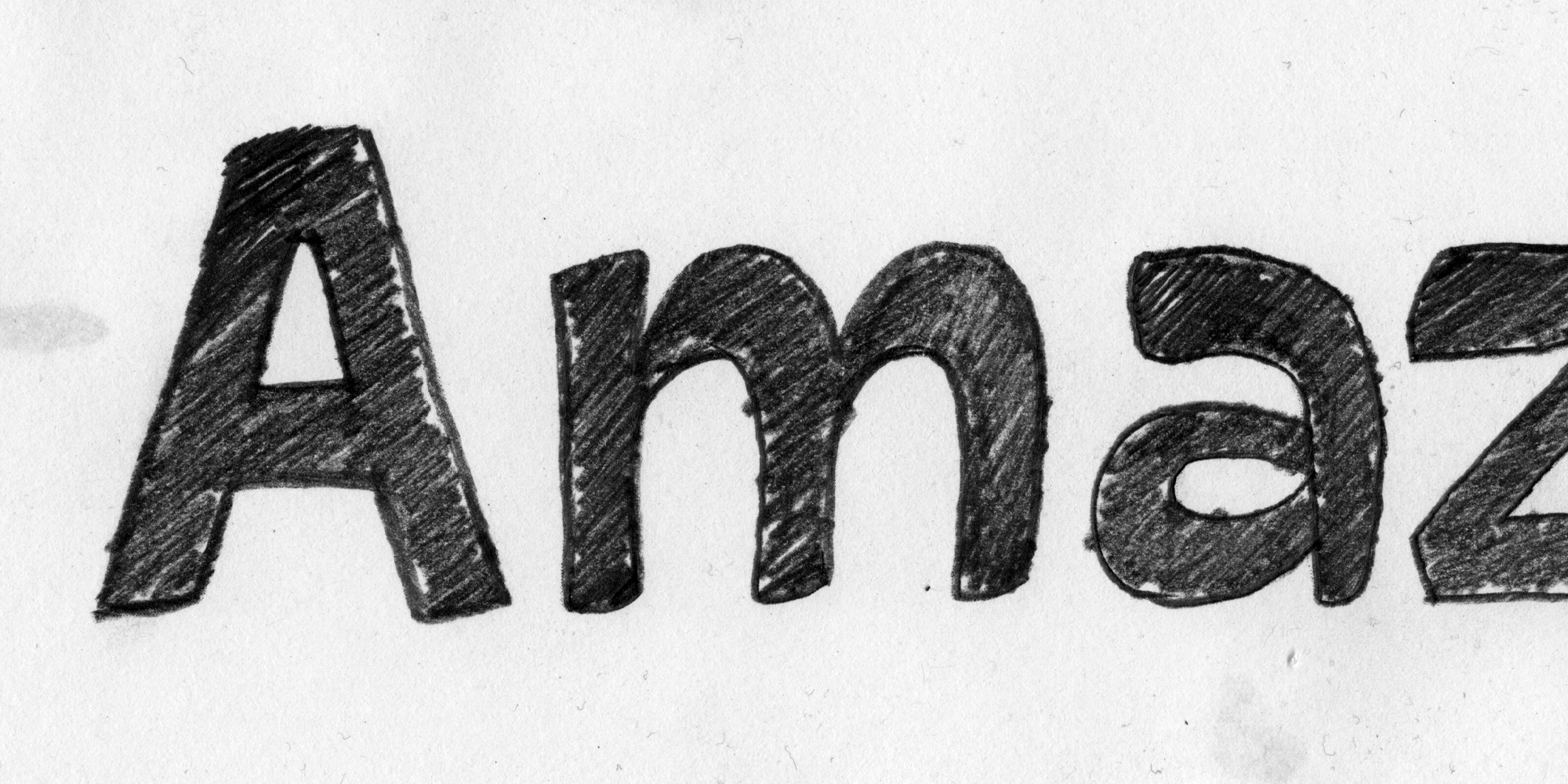
Typography is the only brand element that appears everywhere at once: your logo, your website, your packaging, your ads, your invoices. It's the one thing your audience reads before they read anything else. And yet most brands are wearing someone else's voice.
That's what a custom typeface changes. Not just aesthetically—strategically.
At Resistenza Type, we've been designing calligraphy-based, handcrafted typefaces for over a decade — a catalog of 90+ font families. We've worked with startups, fashion houses, cultural institutions, and global brands. And one question comes up more than any other: what does the process actually look like?
Why Brands Commission Custom Fonts
Owning your visual voice
When you license a commercial font—however beautiful—other brands may be using it too. A competitor in your sector might be set in the same typeface. A rival product on the same shelf could share your letterforms.
A custom typeface is a proprietary asset. It belongs to you, and only you. In many jurisdictions it can be trademarked as part of your brand identity. It becomes, over time, as recognizable as your logo—often more so, because it appears far more often.
Expressing exactly what your brand is
Off-the-shelf fonts are designed for nobody in particular—which means they speak for nobody in particular. They make reasonable compromises across the widest possible audience.
A custom typeface makes no compromises. Every curve, every stroke weight, every detail of spacing is calibrated to your brand's specific tone—whether that's quiet luxury, playful irreverence, technical precision, or cultural warmth. The letters don't just carry your words; they carry your personality.
Solving multilingual and platform challenges
If your brand operates across languages or regions, a custom font ensures genuine visual consistency. Arabic and Latin scripts can feel like they belong to the same family. Your packaging in Korean can carry the same energy as your website in Spanish.
Custom fonts also allow technical fine-tuning that commercial licenses rarely permit: variable font axes tailored to your UI system, spacing calibrated to your grid, hinting optimized for your specific screen contexts. You can explore our variable font collection to see the range of what's possible.
Reducing long-term licensing costs
Brands often reach a point where commercial font licensing—especially for large organizations or global deployments—becomes expensive and administratively complex. A custom typeface eliminates that ongoing cost and dependency. It's an investment that pays for itself.
What the Process Looks Like
There's a common misconception that commissioning a custom font is mysterious or inaccessible. In practice, it's a structured creative process—not unlike commissioning a brand identity or a product design. Here's how we approach it at Resistenza.
1. Discovery and creative brief
Everything starts with listening. We need to understand your brand deeply before touching a single letterform: your tone of voice, your audience, where the font will live (screen, print, signage, packaging), what impression you want to make in three seconds.
We also look at what's not working. Many briefs begin with frustration—a licensing problem, a generic look, a typeface that feels wrong in certain markets or at certain sizes. Understanding the friction is as important as understanding the aspiration.
Outcome: A written creative brief with aesthetic direction, technical specifications, scope of character sets, delivery format, and timeline.
2. Research and typographic territory
Before sketching, we map the typographic landscape. What typefaces do your competitors use? What associations do those letterforms carry? Where are the visual territories that are already crowded—and where is the white space?
We also explore historical and stylistic references—not to copy them, but to understand the visual grammar of the forms we want to build on or against. These references give the design a DNA that feels earned, not arbitrary.
Outcome: Visual references and a shared creative direction for the look and feel.
3. Sketching and concept directions
This is where the work becomes visible. We begin with the foundational characters—the letters whose forms will define the entire system. The lowercase n and o establish rhythm and curve logic. The uppercase H and G test proportion and contrast. Numbers reveal how the typeface handles density.
Typically we develop two or three distinct directions. Each comes with mockups in your real context—your website, your packaging, your app—so you're evaluating letterforms as they'll actually appear, not in a typographic vacuum.
Outcome: Direction approval and mandate for full development.
4. Full typeface development
With a direction approved, we build out the complete character set: upper and lowercase Latin, punctuation, diacritics, numerals, currency symbols, and any additional scripts required. For brands with multilingual needs, this is where the real complexity lives—ensuring that Latin, Cyrillic, Greek, or Arabic versions feel coherent and carry the same voice.
Then comes the invisible craft that makes a typeface actually work: kerning—the optical spacing between every pair of letters—and global spacing that gives the font its rhythm across text. Hinting for screen rendering. Font naming and metadata. Test files.
At Resistenza, our background in calligraphy means this phase is especially deliberate. The logic of the pen—how strokes connect, where they thin, where they stress—gives our typefaces a warmth and humanity that purely geometric construction rarely achieves. It's the same sensibility behind our handcrafted font aesthetic applied to bespoke brand work.
Outcome: Fully functional fonts ready for testing.
5. Testing and refinement
Fonts behave differently in the wild. We test across real devices, operating systems, and rendering environments. We check legibility at small sizes, at display scale, in motion, in print. We review brand alignment—whether the typeface still sounds like you once it's set in actual copy, not just specimen text.
Outcome: A polished, production-ready font family.
6. Delivery and documentation
Final delivery includes everything you need to deploy the font across your organization: web fonts (WOFF2) for digital use, desktop fonts (OTF) for design software, and variable font files if commissioned. We provide usage rights documentation, licensing terms, and a typography usage guide covering scale, pairing recommendations, and brand application guidelines. Learn more about our custom commissions and what's included in each project.
Outcome: A fully ownable, deployable brand asset.
Frequently Asked Questions
How long does a custom font project take?
A typical single-weight custom typeface takes 3–5 months from brief to delivery. A full family with multiple weights and scripts can take 9–18 months. Timeline depends on complexity, scope of character sets, and feedback cycles. We always define milestones upfront.
How much does a custom typeface cost?
Pricing varies with scope—a single brand weight versus a complete variable font family are very different projects. Every project begins with a scoping conversation and a detailed proposal before any commitment. Get in touch to discuss your specific needs.
What do I receive at the end of the project?
You receive final font files in the formats you need (WOFF2, OTF, variable TTF), full ownership and usage rights as defined in the agreement, and documentation for your team. Optional add-ons include a typographic brand manual and design templates.
Can I get a variable font?
Yes. Variable fonts—which allow smooth transitions between weights, widths, or other axes—are increasingly standard in brand type systems, especially for digital-first brands. We design and deliver variable fonts as part of our custom type offering.
Do I need to be a large company?
No. We work with independent brands, studios, and startups as well as established companies. The right moment to invest in custom type is when typography is genuinely central to your brand identity—not when you hit a certain revenue threshold.
A Typeface Is the Shape of Your Brand's Voice
Every brand has a voice in language—a tone, a vocabulary, a way of speaking. Typography is what that voice looks like. It's the accent, the timbre, the physical presence of your words on a page or screen.
A custom typeface means that voice is entirely yours. Not borrowed. Not shared. Not a compromise between your needs and the needs of ten thousand other brands. It's one of the few brand assets that gets more valuable over time—that becomes more recognizable the more you use it, not less.
Thinking about commissioning a custom typeface?
We'd be glad to hear about your project. Get in touch and we'll set up a conversation about scope, timeline, and what a bespoke typeface could mean for your brand.