Font Psychology: How Typography Shapes What We Feel & Think
The Strategic Typography Guide to Boost Brand Impact and Conversions
Before your audience reads a single word, they've already formed an impression. Not from your message—but from your typography.
That's the power of font psychology: the study of how different typefaces influence human emotions, perception, and behavior. Fonts don't just display your message—they embody it. The shape, weight, and rhythm of letterforms communicate mood, credibility, and personality in milliseconds—long before a single sentence is processed.
In this guide, we'll explore the emotional science behind the main font categories, explain why certain typefaces feel the way they do, and show you how to apply typography psychology strategically to build trust, communicate clearly, and convert with confidence.
Why Font Psychology Matters More Than You Think
We process visual information faster than we process words. According to research from MIT, the human brain can recognize visual cues in just 13 milliseconds. That means your font has already spoken before your headline does.
The wrong typeface can undermine trust or create cognitive dissonance between your message and your brand. The right one reinforces identity, triggers the right emotional associations, and makes your content more memorable and persuasive.
Typography isn't decoration. It's strategy. And font psychology is the science behind that strategy.
The Psychology of Font Categories: What Each Style Makes People Feel
Each major typeface category carries a distinct set of emotional and cultural associations. These aren't arbitrary—they're built up through centuries of use, shaped by where and how we've encountered each style throughout our lives. Understanding these patterns lets you make deliberate, emotion-driven typography choices that align your design with your brand's message.
Serif Fonts: Trust, Authority, and Timeless Elegance
Serif typefaces are defined by the small strokes—called serifs—that extend from the ends of each letterform. This seemingly minor detail carries enormous psychological weight. We've encountered serif type for centuries in books, newspapers, legal documents, and academic journals. That cultural history creates an instant association with tradition, authority, and intellectual credibility.
From a design psychology standpoint, serifs guide the eye along the baseline, improving readability in long-form text. But beyond function, the visual structure of a well-crafted serif communicates stability and refinement. High-contrast serifs—where the thick and thin strokes vary dramatically—add an extra layer of luxury and editorial elegance. Luxury fashion houses like Dior and Valentino, premium publishing imprints, and heritage institutions all lean on serif typography to reinforce prestige.
The emotional register of serif fonts includes: trustworthy, authoritative, sophisticated, classic, stable, expensive, intellectual, formal.
- Use if your brand is: classic, luxurious, editorial, institutional, heritage, publishing
- Avoid if your brand is: ultra-modern, casual, startup, tech-forward
Resistenza serif fonts to explore:
- Sidera — A sharp, high-contrast serif that radiates elegance and precision. Its dramatic stroke variation gives it an editorial luxury quality—ideal for premium brands, magazine mastheads, and fashion identity.
- Norman — Sophisticated and stately, Norman blends classical flair with a contemporary sensibility. Its refined proportions work across packaging, editorial design, book covers, and cultural institutions. Featured on the Guitar World cover and Emily Ratajkowski's book.
- Turquoise — A calligraphic serif built on the structure of Roman capitals, crafted with a flat brush. Where most serifs feel typeset, Turquoise feels made—adding warmth and authority simultaneously. Ideal for heritage brands, artisan publishing, and premium packaging.
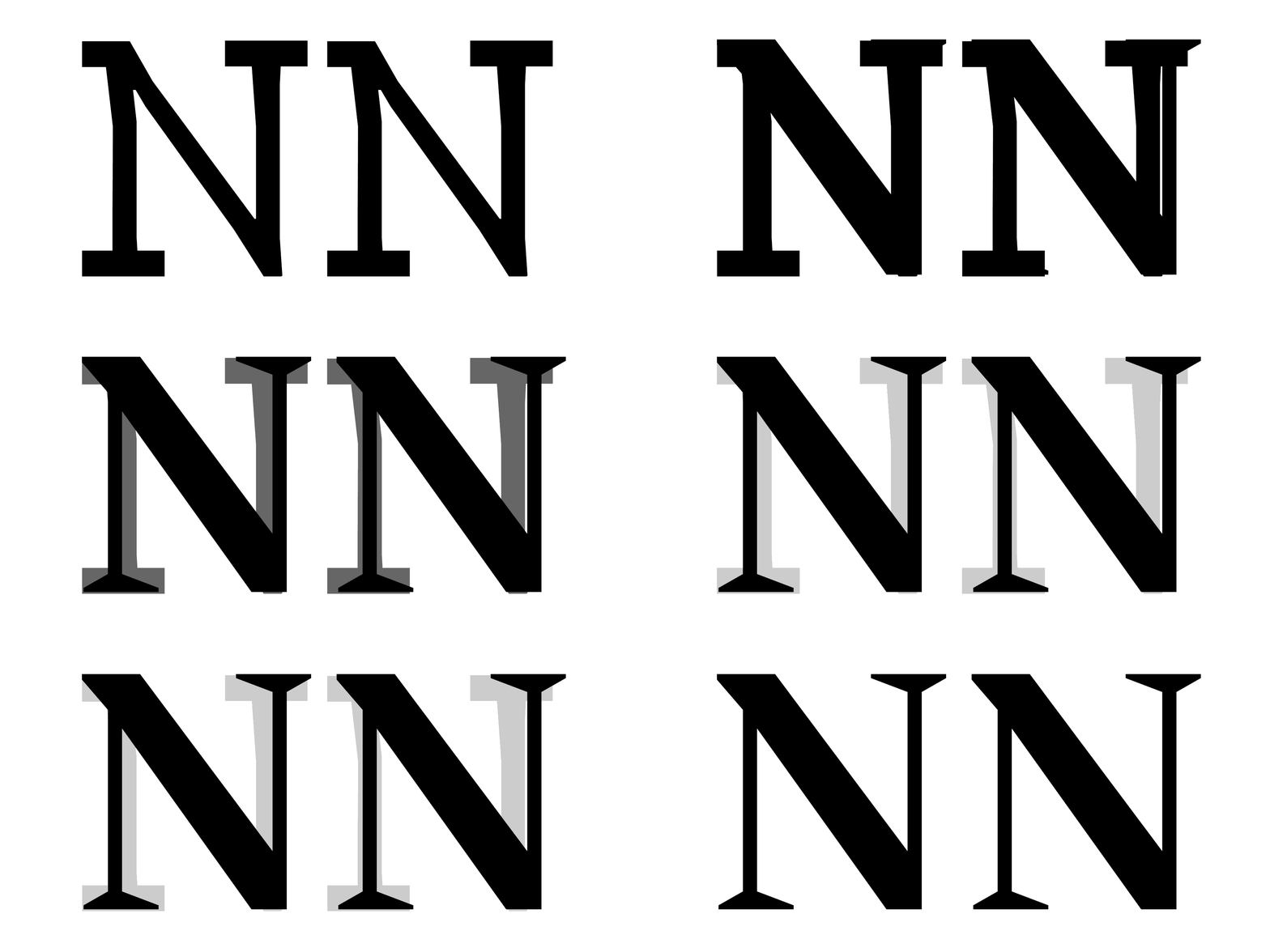
- Effimera (variable) — A technically sophisticated variable serif with wdth (width) and opsz (optical size) axes. This means it can adapt its proportions and stroke contrast precisely to context—from large display sizes to small body text—without losing elegance. A powerful tool for systems-thinking designers.
Sans-Serif Fonts: Clarity, Modernity, and Honest Communication
Sans-serif typefaces—those without the decorative terminal strokes—emerged as the voice of the modernist movement in the 20th century. Stripped of ornament, they represent a break with tradition: forward-thinking, rational, and clear. Today, sans-serifs are the dominant typographic language of digital interfaces, tech brands, and minimalist design systems.
Psychologically, the absence of serifs reduces visual noise, allowing the letterform itself to communicate. Geometric sans-serifs feel precise and architectural. Humanist sans-serifs feel approachable and warm. Grotesks feel neutral and systematic. The category is vast—and the emotional range within it is enormous—but all sans-serifs share a core quality: they say what they mean without decoration.
Tech giants like Google, Airbnb, and Spotify all use sans-serif systems. Minimalist fashion brands like Chanel and Calvin Klein chose sans-serifs to signal modernity and functionality over ornament.
The emotional register of sans-serif fonts includes: modern, clean, honest, efficient, neutral, innovative, approachable, minimal, straightforward.
- Use if your brand is: digital-first, wellness-oriented, modern, tech, startup, fashion-forward minimalist
- Avoid if your brand is: historic, ornate, deeply formal, or heritage-driven
Resistenza sans-serif fonts to explore:
- Industria Sans — Grid-based, rational, and sharp. Designed with digital interfaces and brand systems in mind. Works across breakpoints and scales with confidence—from app UI to large-format print.
- Annuario — A multi-weight sans with a subtle brushy texture that gives it warmth without sacrificing cleanliness. Originally designed for a calendar, it brings a human touch to fashion, culture, and editorial projects.
- Performa — A hybrid with calligraphic inspiration and geometric discipline. Clean and versatile, it communicates intelligence and print culture—a strong option for brands that want modernity with soul.
- Gotti — 10 styles, minimal and precise. Designed in Gothenburg, Gotti has a cool Scandinavian confidence that makes it equally effective in editorial, corporate identity, and wayfinding systems.
- TotalBlack — A modern grotesk inspired by classic sans-serif traditions. 9 weights plus a powerful Display version make it one of the most versatile options in the catalog. Clean, serious, and authoritative—ideal for magazines, logos, and high-impact campaigns.
- Turquoise Sans — Though classified as a sans, Turquoise Sans carries a subtle swelling at the terminal stems—a nod to its sibling Turquoise and the Roman capitals that inspired it. The result is an elegant, contemporary sans that feels distinguished rather than generic.
- TheLUXX — A geometric, rational sans with Italian Art Deco roots from the 1930s. It carries the velocity and precision of a modernist poster—ideal for luxury branding that wants presence and edge in equal measure.
- Tresor — A high-contrast sans with lo-fi nostalgia and a romantic twist. Its extended set of swashes, ligatures, and decorative alternates (1000+ glyphs) makes it a rare thing: a sans-serif with character and depth. Perfect for fashion, editorial, and premium lifestyle brands.
- Squadra — A contemporary geometric sans inspired by Eurostile, available in 18 styles including a variable version. Its clean-cut, square structure feels industrial and architectural—unapologetic and precise. Think Bauhaus meets brutalism. Ideal for tech, architecture, and modernist design systems.
- Ordine — In its sans expression, Ordine brings clean structural logic with an understated elegance. At home in editorial layouts, UI systems, and brand identities that need clarity without coldness.
Slab Serif Fonts: Confidence, Strength, and Grounded Craft
Slab serifs—also known as Egyptian typefaces—have thick, block-like serifs that give them a powerful, grounded visual weight. Where traditional serifs feel refined and intellectual, slabs feel assertive and built to last. They emerged in the 19th century for advertising and poster printing, designed to be seen from a distance and demand attention.
Psychologically, slab serifs combine the trustworthiness of a serif with the boldness of a display face. They communicate that a brand is substantial, hands-on, and rooted. That's why slabs are a natural fit for industrial brands, sporting goods, craft businesses, and any brand that wants to project competence and confidence without pretension.
The emotional register of slab serif fonts includes: strong, bold, dependable, confident, assertive, industrial, grounded, practical, capable.
- Use if your brand is: industrial, sporty, craft-focused, bold, heritage Americana, outdoor
- Avoid if your brand is: delicate, feminine, minimal, or luxury-focused
Resistenza slab serif fonts to explore:
- Auster Slab — A clean, assertive slab with a classic American poster personality. Its well-balanced proportions make it versatile for everything from brand identity to editorial headlines to packaging that needs typographic authority.
Script Fonts: Elegance, Emotion, and Calligraphic Sophistication
Script typefaces are rooted in the tradition of calligraphy and penmanship—the art of writing with a tool held at an angle, creating natural contrast between thick downstrokes and thin upstrokes. This origin gives scripts their defining emotional quality: they feel made by a human hand, and that handmade quality triggers associations of care, craft, and intimacy.
But not all scripts feel the same. Formal copperplate-inspired scripts communicate luxury and ceremony. Loose brush scripts feel spontaneous and expressive. High-contrast calligraphic scripts feel both artistic and authoritative. What unites them is their ability to convey personality—a quality that neutral sans-serifs deliberately suppress.
From a typography psychology perspective, script fonts activate the same neural pathways as actual handwriting, creating a sense of personal connection. Brands that use script typography—Coca-Cola, Cadbury, Ford—have been doing so for over a century because that connection is real and durable.
The emotional register of script fonts includes: elegant, personal, romantic, artistic, expressive, feminine, crafted, intimate, luxurious, creative.
- Use if your brand is: luxury, beauty, fashion, artisanal, bridal, premium hospitality
- Avoid if your brand is: legal, scientific, formal institutional, or tech
Resistenza script fonts to explore:
- Nautica — A high-contrast script based on the Copperplate ductus—one of the most prestigious calligraphic traditions. With over 1,000 glyphs, three weights, and ligatures inspired by brush pen strokes, Nautica has a strong, original character. Used by Kali Uchis (Sin Miedo album) and Star Trek Picard.
- Mina — Inspired by the elegant calligraphy of the 1950s, Mina captures seaside glamour with long elastic letter connections, clean thin lines, and a relaxed, confident rhythm. Eleven styles including Calligraphic and Shadow variants. Featured on Taylor Swift's Speak Now editions.
- Modern Love — Romantic, expressive, and confident. A script with a bold flourish that feels both contemporary and emotionally charged—ideal for lifestyle, beauty, and fashion brands that want typographic presence.
- Oddity Script — A contemporary script with personality and controlled irregularity. Suited for trend-conscious and culture-driven brands that want something calligraphic but distinctly modern.
- Crispo Script — A crisp, high-contrast calligraphic script with a clean elegance that works beautifully in premium packaging and cosmetics—refined without being stiff.
- Timberline — A handmade felt-brush script with a warm, rustic quality. Its extensive set of alternates and ornaments lets you build organic lettering compositions—ideal for artisan, outdoor, and craft-focused brands.
- Smoothy — A rounded brush script that balances friendliness with organic warmth. The connected strokes and gentle rhythm make it inviting and approachable—great for food, wellness, and artisan packaging.
- Adore You — Delicate, thin-stroked, and graceful. For romantic or feminine brands that want typographic refinement without formality—think artisan skincare, florists, or handcrafted jewelry.
Handwritten Fonts: Authenticity, Warmth, and Human Connection
Where script fonts draw from calligraphic tradition and formal penmanship, handwritten typefaces replicate the natural quirks and imperfections of everyday handwriting. Uneven baselines, irregular spacing, spontaneous strokes—these "flaws" are precisely what makes handwritten type feel authentic.
In an era of digital perfectionism, imperfection signals humanity. Handwritten fonts tell your audience: this wasn't mass-produced. It was made with intention. That quality resonates powerfully in food, artisan, kids, and lifestyle categories where authenticity is a core brand value.
The emotional register of handwritten fonts includes: authentic, warm, approachable, personal, playful, spontaneous, friendly, unpretentious, human.
- Use if your brand is: artisanal, food & beverage, kids, indie lifestyle, local, sustainability-focused
- Avoid if your brand is: corporate, institutional, luxury, or formal
Resistenza handwritten fonts to explore:
- Hello Fresh — Warm and casual, with a clean, friendly energy. The naturalness of its strokes makes it feel genuinely unpretentious—perfect for organic food brands, cafés, and lifestyle packaging.
- Guess What — Five complete sets of hand-drawn letterforms sketched with a felt-tip marker. Activating OpenType features randomly combines them, creating a typographic texture that feels genuinely written rather than typeset. Over 1,500 glyphs. Featured by Happy Soup / Popular.fi.
- Dolce Caffè — Evokes the warmth of a chalkboard handwritten with care. Relaxed, inviting, and instantly recognizable as human-made. Ideal for food, hospitality, slow-living brands, and anything that wants to feel like a neighborhood favorite.
- Dolcissimo — A hand-drawn font with a geometric skeleton and 28 superimposable decorative styles—Snow, Stars, Hearts, Flowers, Dots, Mosaic, and more. Overlap the layers to create colorful, joyful compositions. Built for packaging, branding, and display that needs personality and celebration.
- Little Boxes — Designed with a felt pen on smooth paper to capture the illusion of human craft, then digitized with precision. Its box-like letterforms feel whimsical and happy—with three styles (Regular, Slanted, Dance) and an extensive set of OpenType alternates. Works across print and digital with equal charm.
Monospaced Fonts: Precision, Logic, and Technical Clarity
Monospaced typefaces assign equal horizontal space to every character—the letter "i" takes up the same width as "m". This mechanical constraint, originally born from typewriter technology, creates a very specific visual rhythm: measured, systematic, and unhurried. Every character feels counted.
That sense of precision makes monospaced fonts a natural language for technology, science, and code. But beyond the functional, mono type has become a cultural signifier for a certain kind of thinking: methodical, transparent, and rigorous. Brands in the developer tools, data, fintech, and research spaces use mono typography to signal that they take accuracy seriously.
The emotional register of monospaced fonts includes: precise, technical, logical, systematic, transparent, methodical, coding-culture, analytical, neutral.
- Use if your brand is: developer tools, fintech, scientific, data-driven, technical SaaS
- Avoid if your brand is: emotional, lifestyle-driven, luxury, casual
Resistenza monospaced fonts to explore:
- Monologo — A monospaced family that goes beyond utility. With Latin, Greek, and Cyrillic support, old-style figures, and contextual alternates, Monologo is a technically refined mono with genuine typographic personality. For brands that want precision without sterility.
Display & Decorative Fonts: Impact, Personality, and Visual Memorability
Display typefaces exist for one purpose: to be seen. They are not designed for extended reading—they are designed for the moment of first contact, when a brand needs to stop someone mid-scroll and make an impression that sticks. Display fonts are the wildcards of typography: expressive, distinctive, and impossible to ignore when used well.
What unifies display typefaces—despite their enormous diversity—is intent. Every stroke, every curve, every unusual proportion is a deliberate choice designed to communicate a very specific feeling. A layered retro display says something completely different from a compressed editorial title or a fluid Art Nouveau letterform. Used in the right context, display typography becomes the most recognizable element of a brand.
The emotional register of display fonts varies widely, but typically includes: bold, expressive, unique, memorable, trend-aware, fashionable, cultural, artistic, statement-making.
- Use if your brand is: fashion-forward, cultural, experimental, music, entertainment, youth, luxury with attitude
- Avoid if your brand is: formal, corporate, institutional, or highly functional
Resistenza display & decorative fonts to explore:
- Superpop — Sweet, rounded, and bold, with a brushy script twist in its italic. Made for titles, packaging, and campaigns that want visual warmth and playful personality. A font that makes people smile.
- Furbo — One of the most technically expressive display fonts in the catalog: three variable axes (Width, Contrast, and the unique Turbo axis), 30 static styles. Furbo can be architectural and restrained or wild and deconstructed—it's a design tool as much as a typeface.
- Pressato — Compressed, dense, and visually intense. Pressato communicates pressure and urgency—perfect for editorial headlines, posters, and packaging that need to feel tightly wound and impossible to look away from.
- Flipante — A condensed-to-extended variable display font with width and slant axes. Its dramatic proportional range—from ultra-compressed to expanded—makes it ideal for branding and packaging that needs to make a strong typographic statement.
- Squadra Stencil — The stencil evolution of Squadra. Precisely placed breaks in the letterforms create an industrial, almost military texture—strong visual identity for brands that want edge and authority. Used in all-caps, it becomes a system.
- Vermouth — A layered display family inspired by Italian bar and shop signs of the 1960s. Each of its styles can be overlapped to build colorful, multi-tonal compositions. It's typography as material—nostalgic, graphic, and deeply Italian in spirit.
- Royale — A regal, ceremonial display typeface with deep calligraphic roots. Royale communicates occasion and exclusivity—ideal for luxury events, high-end packaging, and statement headlines that need a sense of theatre.
- Nostalgia — A retro-inspired display font that captures the positive mood of vintage letterforms with softened edges and rounded terminations. Extended alternates, swashes, and a companion icon set let you build rich, layered nostalgic compositions. Perfect for specialty food, vintage packaging, and warm heritage branding.
- Kiosq — Inspired by the hand-painted shop signs and kiosk lettering of an older urban world. Bold, architectural, and full of street-level character. For brands that want graphic authority with a human, crafted origin.
- Revolute — Dynamic, editorial, and culturally charged. Revolute has the energy of music and movement—suited for music brands, cultural institutions, and bold campaigns that want typographic momentum.
- Liquida — Fluid, organic letterforms that evoke movement, natural materials, and flowing form. For brands in beauty, wellness, or design that want to communicate transformation and sensory experience.
Why Fonts Feel the Way They Do: The Science Behind Font Psychology
Understanding font psychology at a deeper level means looking at three interconnected mechanisms:
1. Visual Association and Cultural Memory
Every font carries the memory of where we've seen it before. Serif typefaces appear in centuries of books, legal documents, and newspapers—so the brain links them to authority and permanence. Handwritten fonts trigger the same neural associations as receiving a personal letter. These connections are largely subconscious and operate before any rational reading takes place.
2. Shape and Form Psychology
The physical geometry of letterforms activates basic psychological responses that mirror our response to the physical world:
- Curves and rounded forms → friendly, approachable, safe, organic
- Sharp angles and rigid geometry → decisive, aggressive, precise, modern
- Thin strokes and delicate proportions → elegant, fragile, luxurious, refined
- Heavy weights and bold forms → strong, assertive, confident, bold
- Irregular, imperfect strokes → human, authentic, handcrafted, warm
- Even, mechanical spacing → logical, systematic, technical, neutral
3. Cognitive Load and Readability
How easily a font can be read affects how we feel about the content it carries. Research suggests that text in a difficult-to-read font actually causes readers to evaluate arguments less favorably—the cognitive friction created by hard-to-read type transfers into negative associations with the message itself. Clarity, therefore, isn't just a UX concern—it's a persuasion strategy.
4. Variable Fonts and Adaptive Emotional Range
Variable fonts like Furbo, Squadra Variable, Flipante, or Effimera introduce a new dimension to typography psychology: emotional fluidity. By animating axes like weight, width, or slant, a single typeface can shift its emotional register dynamically—building intensity, expressing movement, or adapting to context. The emotional tone becomes programmable, not fixed.
The Strategic Typography Checklist
- Start with emotion, not aesthetics: What should your audience feel the moment they see your brand? Calm and trustworthy? Exciting and bold? Intimate and personal? Let that emotional target drive your font selection.
- Match your industry and positioning: A heritage law firm and a playful food startup need fundamentally different typographic voices—even if both are "professional."
- Build contrast without confusion: Pair fonts with complementary voices. A bold display headline paired with a clean, neutral body font creates hierarchy without visual noise.
- Consider variable fonts for flexibility: A single variable font can serve multiple emotional contexts across your brand—reducing file weight while increasing expressive range across touchpoints.
- Test perception before launching: Share typography mockups with real users. Ask how it makes them feel. The answer often reveals misalignments that rational design reviews miss.
Tips for UI & Web Typography
- Add letter spacing (tracking) for small text or all-caps settings to improve legibility.
- Use generous line height (1.5–1.7×) for body text paragraphs.
- Design in grayscale first: good typography communicates tone without relying on color.
- Use all-caps sparingly—it can feel urgent or aggressive at scale, and reduces readability in long settings.
- Leverage variable font axes like wdth and opsz for responsive design—they allow the same typeface to adapt beautifully to different screen sizes and reading contexts.
Typography Is Brand Psychology
Fonts are silent storytellers. They communicate mood, credibility, and identity before a single word is consciously read. When your typeface aligns with your brand's values, message, and audience, you're not just designing something that looks good—you're engineering an emotional experience that builds trust, connection, and conversion.
The best typographic choices are invisible in the best possible sense: the audience doesn't notice the font, they simply feel the brand. That's font psychology working at its highest level.